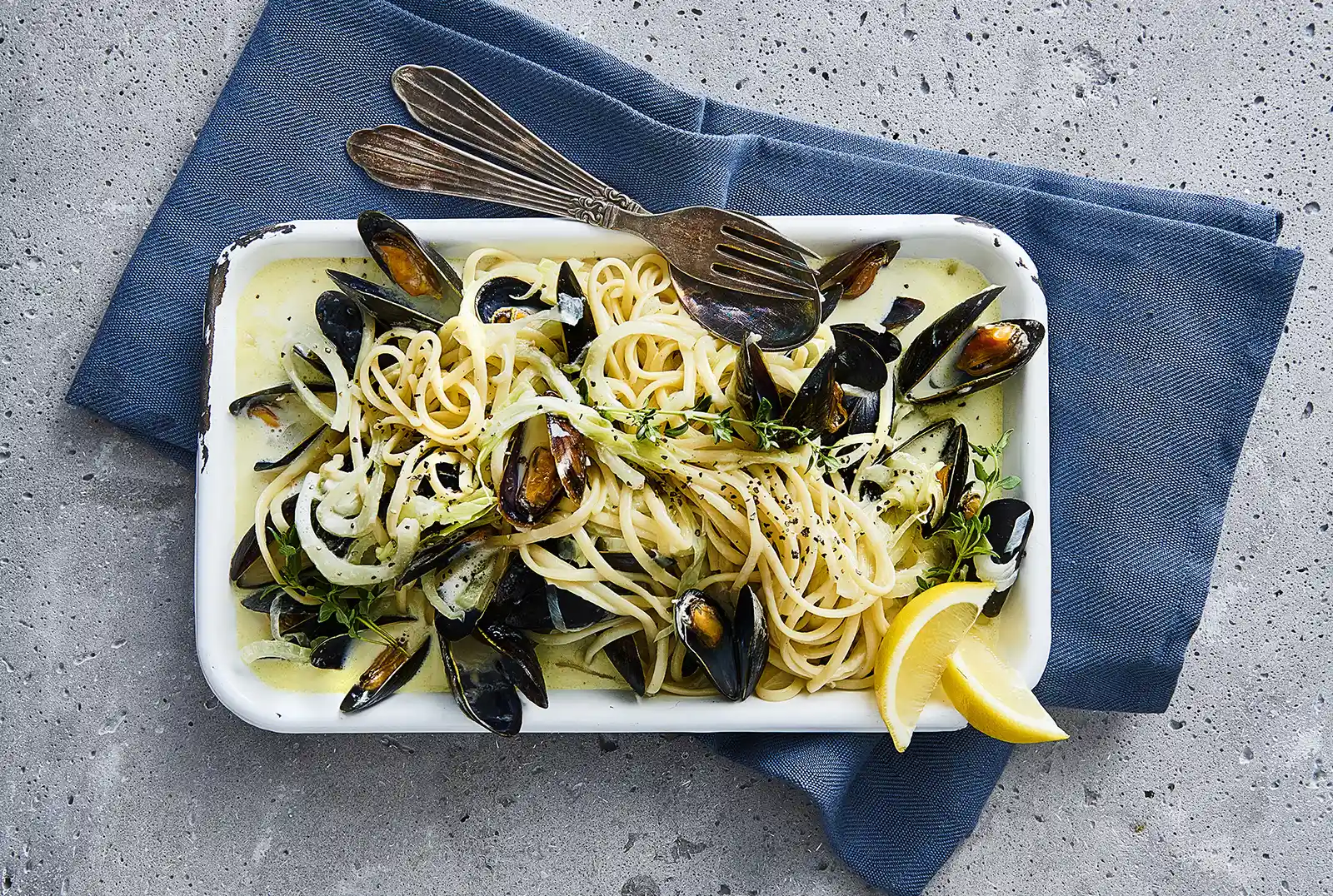
Pasta for everyday meals and special occasions
- Der er ingen opskrifter i denne kategori.
Inspiration for easy and delicious pasta dishes
Pasta dishes can be varied and prepared in countless ways. We love sharing tasty, delicious pasta dishes for both everyday meals and special occasions. Pasta is easy, budget-friendly, and a great base for flavorful meals that are often quick to make and also kid-friendly.
Pasta dishes can be a complete meal on their own, or simply served with a delicious salad and good bread. Some types of pasta are perfect for starters or as a side dish to other meals, such as meat dishes or vegetarian pasta dishes.
Pasta dishes aren’t just practical, easy everyday food—using just a few extra ingredients, you can quickly create a delicious, filling dinner. So whether you’re looking for inspiration for a quick and simple weekday dish or want to impress your taste buds with something extraordinary, our pasta recipes let you explore the exciting world of pasta in new ways.
How to cook the perfect pasta al dente
Bronze-cut pasta is the world’s best pasta
Know your pasta by type
There are more than 300 different types of pasta, all made from the same simple, traditional ingredients: flour, water, and sometimes eggs. Most pasta types work better in certain dishes than others, so it’s helpful to know the most common types. Italians divide pasta into two groups: lisce (smooth) and rigate (ridged). So if you see the term penne rigate on a bag of pasta in the supermarket, it means ridged penne pasta.
Farfalle
Farfalle is the type of pasta we call “bow-tie pasta” or “butterfly pasta.” These nicely shaped pieces are made by pinching a flat, square, serrated piece of pasta in the middle to form a bow. Farfalle means “butterfly” in Italian. They’re great with cream and tomato sauces, as well as in pasta salads.
Fusilli
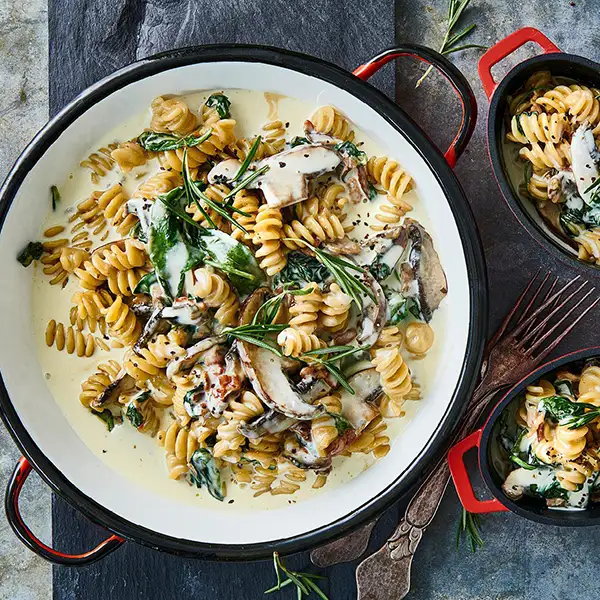
Fusilli is often called “pasta spirals” here. Fusilli comes from the Italian word fuso, which means “to spin.” The corkscrew shape is created by spinning the pasta dough around a rod. Pasta spirals are made from flour and water. Fusilli is well suited to rich sauces with, for example, minced beef, pasta salads, and baked pasta dishes.
Linguine
Linguine means “little tongues” in Italian, and the name refers to the shape of this slightly oval, elongated pasta that looks like something between spaghetti and ribbon pasta. The shape is flatter and a bit wider than spaghetti, but otherwise made the same way. Linguine is great with light sauces with meatballs and vegetables, and it also tastes great with, for example, tuna and tiger prawns.
Penne
Penne is a small tube-shaped pasta and one of the most common types, often called “pasta quills” here, and you can find it in most supermarkets. This pasta gets its name from the diagonally cut edges that characterise penne and resemble the tip of a fountain pen. The shape makes it well suited to light sauces like pesto, tomato sauce, and arrabbiata. Penne usually doesn’t contain eggs.
Spaghetti
The name spaghetti comes from the Italian spaghetto, which means string. Spaghetti is a long, thin, cylindrical type of pasta, usually made exclusively from durum wheat and water, which gives it a whiter rather than yellowish colour. Spaghetti is used in a wide range of classic pasta dishes, such as spaghetti bolognese.
Tortiglioni
Tortiglioni is a short, tube-shaped pasta cut straight across and with ridges—i.e., rigate. The ridges are spiral-shaped. Tortiglioni comes from the Italian word meaning “to twist,” which refers to the shape of the ridges. The distinctive design comes from the production process, where the pasta is twisted in the die. Tortiglioni is well suited to creamy pasta dishes with cream sauce because the sauce clings to the pasta’s ridges, but it’s also great in a pasta salad with vegetables.